






A Guilt-Free Guide to Self-Pleasure (Yes You Deserve It)

This content is for informational purposes only and does not constitute medical advice. Consult a healthcare professional for personal guidance.
Key Takeaways
- Self-pleasure is a normal, healthy behaviour endorsed by every major medical and psychological body worldwide
- Guilt around self-pleasure is learned. It does not come from your body, it comes from your environment
- The shame cycle (pleasure → guilt → more shame → avoiding pleasure) is more harmful than the act itself
- Self-exploration is actually foundational to better partnered intimacy, you cannot guide someone else without knowing yourself
- Breaking free from guilt is a process, not an event, be patient with yourself
If guilt is the first thing you feel after pleasure, this article is for you. Not because there is something wrong with feeling guilty, but because the guilt itself is the problem, not the act that triggered it. And understanding where that guilt comes from, why it persists, and how to loosen its grip is one of the most important things you can do for your intimate wellbeing.
Cultural shame around self-pleasure runs deep in India, perhaps deeper than in most places. The combination of colonial-era moralising, religious doctrine, family silence, and the persistent myth that self-pleasure causes physical harm has created generations of people who engage in a completely normal behaviour and then punish themselves for it.
This punishment, the guilt, the shame, the promises to never do it again, the feeling of being broken or weak, is the actual damage. Not the self-pleasure. The self-pleasure is fine. Better than fine. It is healthy, normal, endorsed by medical science, and practised by the vast majority of human beings throughout history.
Where the Guilt Comes From
Colonial-Era "Hygiene" Campaigns
In the 18th and 19th centuries, European medical establishment promoted the idea that self-pleasure caused everything from insanity to blindness to epilepsy. These claims had no scientific basis but were extraordinarily effective at instilling shame. British colonial rule imported these attitudes to India, where they merged with existing cultural norms to create a uniquely potent stigma.
Religious and Cultural Frameworks
Multiple religious traditions discourage or prohibit self-pleasure, often framing it as a waste of "vital energy" or a failure of self-control. While religious beliefs are personal and valid, it is worth recognising that the intensity of guilt many people feel around self-pleasure exceeds what most religious texts actually prescribe, the cultural amplification of religious teachings has created a shame response that is disproportionate to the original message.
Family Silence
In most Indian households, self-pleasure is never discussed, except through prohibition. The absence of normalising conversation means that every person who discovers self-pleasure (which is nearly everyone) does so in isolation, without the context that would tell them: this is normal, millions of people do this, and you are not alone.
The Dhat Syndrome Myth
The culturally specific belief that semen loss causes physical depletion creates particular anxiety for men, transforming a normal physiological function into a perceived health crisis. This belief, while not supported by any medical evidence, is reinforced by certain Ayurvedic practitioners and health forums, perpetuating the cycle of shame.
What the Science Actually Says
Every major medical and psychological body worldwide recognises self-pleasure as a normal part of human sexuality:
- Physical benefits: Stress reduction, improved sleep, pain relief (through endorphin release), better immune function, and for those with prostates, potentially reduced risk of certain health issues.
- Psychological benefits: Body awareness, improved mood, reduced anxiety, and a healthier relationship with one's own sexuality.
- Relational benefits: People who understand their own arousal patterns through self-exploration are better able to communicate their needs to partners, leading to more satisfying partnered experiences.
The only documented psychological harm from self-pleasure comes from the guilt itself, not from the act. Studies consistently show that people who feel guilty about self-pleasure have lower sexual satisfaction, higher anxiety, and poorer body image than those who engage in the same behaviour without guilt.
How to Start Unlearning Guilt
Step 1: Name the Source
Identify where your guilt comes from: family messaging, religious teaching, cultural norms, a specific experience. Naming the source externalises it: the guilt is not an inherent property of your body or the act. It is something that was placed on you from outside.
Step 2: Reframe the Narrative
Replace "I should not be doing this" with "I am getting to know my own body." Replace "This is a weakness" with "This is a normal human behaviour endorsed by medical science." The reframing may feel forced at first. That is normal. You are building a new neural pathway alongside an old one.
Step 3: Create a Positive Environment
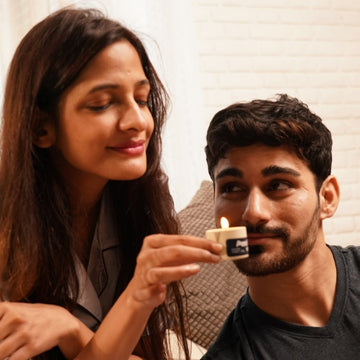
If self-pleasure has always been a rushed, secretive, guilt-laden experience, deliberately make it different. Take your time. Create privacy without anxiety. Light a MyMuse Melt Candle. Put on music. Treat the experience as self-care rather than something to get through quickly before the guilt arrives.
Step 4: Process the Post-Pleasure Feelings
After self-pleasure, notice the feelings that arise without acting on them. If guilt appears, observe it: "There is the guilt. I know where it comes from. It does not reflect the reality of what I just did." Over time, the guilt response weakens as the new, evidence-based narrative strengthens.
Step 5: Seek Support If Needed
If guilt is persistent and significantly impacts your quality of life, a therapist specialising in sexual health can provide structured support. This is not a sign of pathology. It is a sign that deeply ingrained cultural programming sometimes requires professional help to process.
A Note on Self-Exploration
Self-pleasure is not just about relief or orgasm. It is about self-knowledge. Understanding what your body responds to, what kind of touch, what pace, what pressure, what fantasies, is foundational to good partnered intimacy. You cannot guide a partner to please you if you have not explored what pleases you first.
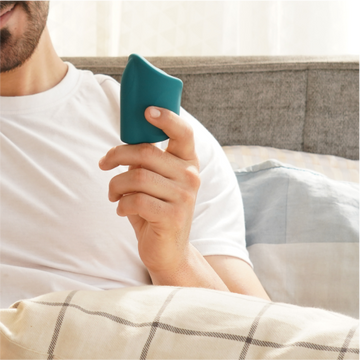
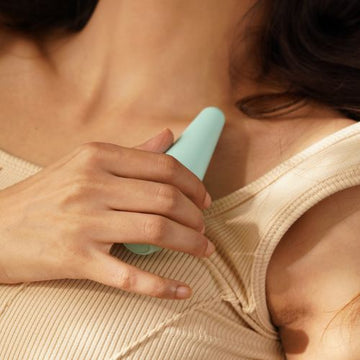
Products designed for self-exploration, like MyMuse Pulse (₹1,799) for external stimulation or MyMuse Groove+ (₹2,999) for internal and external, are tools for this exploration, no different from a yoga mat being a tool for physical practice. They help you discover what works for your unique body.
Frequently asked questions
Is self-pleasure normal for married people?
Yes. Self-pleasure and partnered intimacy serve different needs and are not mutually exclusive. Many people in happy, sexually active relationships also engage in self-pleasure. It is not a commentary on the quality of the relationship. It is a normal, independent aspect of individual sexuality.
How do I stop feeling guilty after self-pleasure?
Guilt does not disappear overnight, it fades with consistent reframing. Each time guilt appears, acknowledge it without judgment ("There is the guilt again"), remind yourself of the medical reality (this is normal and healthy), and avoid making promises to stop (which reinforce the shame cycle). Over weeks and months, the guilt response weakens as the new framework takes hold.
Should I talk to my partner about self-pleasure?
If you are comfortable doing so, yes. Normalising the conversation can deepen intimacy and remove secrecy. Many couples incorporate self-pleasure into their shared intimate life, either as mutual exploration or simply as an acknowledged aspect of individual sexuality. The conversation itself is an act of vulnerability and trust.
Is self-pleasure different for women?
The physiology is different (different anatomy, different arousal patterns), but the normalcy is identical. Female self-pleasure carries additional stigma in most cultures, which means the guilt may be more intense and the need for accurate information even greater. Women who explore self-pleasure report improved body image, better understanding of their arousal, and higher satisfaction in partnered intimacy.
Can self-pleasure become a problem?
Only if it causes significant distress, replaces all social interaction, or interferes with daily functioning. The frequency itself is not the issue, the impact on quality of life is. If self-pleasure is a healthy part of your routine that does not cause distress, it is not a problem. If it is compulsive and causing dysfunction, a therapist can help.
- Trusted by 3.75L+ Readers
- Expert-Backed Guidance
Start Your Journey
From personal massagers to massage candles, MyMuse makes self-care feel exactly as it should, guilt-free.
Check It OutLast updated: April 2026
Prices checked on 03 Oct 2026 on mymuse.in.