








The Science of Nipple Sensitivity (It's More Interesting Than You Think)

This content is for informational purposes only and does not constitute medical advice. Consult a healthcare professional for personal guidance.
Key Takeaways
- Nipple sensitivity varies enormously between individuals, and even between your own two nipples
- Nipple stimulation activates the same brain region (genital sensory cortex) as genital stimulation
- Approximately 1-5% of people can reach orgasm through nipple stimulation alone
- Sensitivity changes with hormonal cycles, age, temperature, and arousal state
- People of all genders have sensitive nipples, male nipple sensitivity is underexplored but genuine
Nipple sensitivity is one of those topics that everybody has personal experience with but nobody fully understands. Why are some people's nipples so sensitive that a brush of fabric feels electric, while others feel almost nothing? Why might your left nipple respond differently from your right? And why does the medical literature refer to nipple-induced orgasm as if it were rare when surveys suggest it is more common than anyone assumed?
A neuroscientist who studies sensory processing helped us map the science of nipple sensitivity, and the answers are more interesting than you might expect.
The Neuroscience
The Brain Connection
In 2011, a landmark study using fMRI brain imaging (published in the Journal of Sexual Medicine) made a startling discovery: nipple stimulation activates the genital sensory cortex, the same brain region that processes sensation from the genitals. This was the first neurological evidence that the nipple-to-brain pathway overlaps with the genital-to-brain pathway, providing a physiological explanation for why nipple stimulation can feel sexual and, for some people, can trigger orgasm.
The study found this activation in both women and men, though the research on male nipple sensation remains limited due to cultural assumptions that male nipples are not sexually relevant (they are).
Nerve Density
The nipple and areola contain dense concentrations of nerve endings, including several types of mechanoreceptors (touch sensors), thermoreceptors (temperature sensors), and nociceptors (pain/pressure sensors). The variety of receptor types explains why nipples respond to such a wide range of stimuli, light touch, firm pressure, temperature changes, and pain all register distinctly.
Importantly, the density and sensitivity of these nerve endings varies significantly between individuals, and even between your own two nipples. Asymmetric nipple sensitivity is common and normal.
Why Sensitivity Varies
Hormonal Cycles
For people who menstruate, nipple sensitivity fluctuates throughout the menstrual cycle. Many report heightened sensitivity in the days before menstruation (when progesterone peaks and breast tissue retains more fluid) and during ovulation. Pregnancy dramatically increases nipple sensitivity due to elevated oestrogen and prolactin levels.
Age
Nipple sensitivity tends to peak during the reproductive years and may decrease after menopause (due to declining oestrogen levels) or with age in all genders. However, this is a general trend, many older adults report maintained or even increased sensitivity due to greater body awareness and attentiveness.
Temperature
Cold causes nipple erection (the contraction of smooth muscle fibres in the nipple), which increases sensitivity by bringing nerve endings closer to the surface. Warmth can reduce sensitivity by relaxing the same tissues. Temperature play, alternating warm and cool stimulation, exploits this mechanism to create heightened sensation.
Individual Neurology
Some people are simply wired with more nerve endings in their nipples than others, just as some people are more sensitive to touch in general. This is genetic variation, not a function of behaviour or experience.
Nipple Stimulation Techniques
Given the variety of nerve receptors in the nipple, varied stimulation produces the best response:
- Light circling: A fingertip tracing circles around the areola stimulates mechanoreceptors without overwhelming them. Start wide and spiral inward.
- Gentle pinching: Firm but gentle pressure between thumb and forefinger activates deeper pressure receptors. Rhythmic pinching can build arousal progressively.
- Temperature contrast: Alternating between warm mouth and cool breath (or an ice cube) activates thermoreceptors alongside touch receptors, creating a layered sensation.
- Suction: Gentle oral suction on the nipple mimics a particular type of pressure that many people find intensely pleasurable. The combination of warmth, moisture, and suction activates multiple receptor types simultaneously.
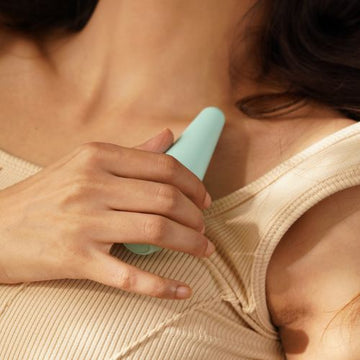
- Vibration: Applied vibration (from a personal massager) stimulates nerve endings at frequencies that manual touch cannot replicate. Some people who do not respond strongly to manual nipple stimulation are highly responsive to vibration.
Nipple Sensitivity Science: Your Questions Answered
Can men have nipple orgasms?
Yes. The fMRI research confirmed that male nipple stimulation activates the genital sensory cortex. While research on male nipple orgasm is limited, anecdotal and survey data suggest that a small percentage of men can achieve orgasm through nipple stimulation alone. Male nipple sensitivity is genuine and underexplored due to cultural assumptions.
Why are my nipples sometimes too sensitive to touch?
Hypersensitivity can occur due to hormonal changes (particularly premenstrual), cold temperature, friction from clothing, or dermatological conditions. If nipple pain or hypersensitivity is persistent and not linked to your cycle, consult a healthcare provider. During intimacy, communicate to your partner when direct contact is too intense, indirect stimulation through clothing or around the areola is a viable alternative.
Does nipple piercing affect sensitivity?
Mixed evidence. Some people report increased sensitivity after piercing (possibly due to nerve regeneration creating new pathways), while others report decreased sensitivity (due to nerve damage). The outcome depends on the piercing technique, healing process, and individual nerve anatomy. If sensitivity is important to you, discuss the risks with your piercer.
Is it normal for one nipple to be more sensitive than the other?
Completely normal. Asymmetric sensitivity is common throughout the body. Most people have one hand that is more dexterous, one ear that hears better, and one nipple that is more responsive. The difference is typically due to variations in nerve density and does not indicate any medical concern.
Can breastfeeding affect nipple sensitivity permanently?
Some people report changes in nipple sensitivity after breastfeeding. The suckling process can desensitise nerve endings temporarily, and hormonal changes during and after breastfeeding affect tissue response. Most people report that sensitivity returns to baseline within months of weaning, though some experience permanent changes, either increased or decreased sensitivity.
- Trusted by 3.75L+ Readers
- Expert-Backed Guidance
Pleasure Meets Quality
Explore MyMuse's range of intimate wellness products, designed for people who believe in exploring every sensation.
Explore the RangeLast updated: April 2026