







The Surprising Link Between Sleep and Your Sex Drive

This content is for informational purposes only and does not constitute medical advice. Consult a healthcare professional for personal guidance.
Key Takeaways
- Just one hour less sleep per night can reduce testosterone levels by up to 15%, directly diminishing desire across all genders
- Sleep deprivation triggers cortisol production, which actively suppresses the hormones responsible for arousal and sexual response
- Women who sleep one extra hour per night report a 14% increase in the likelihood of intimate activity the following day
- Blue light from phone and laptop screens suppresses melatonin by up to 50%, disrupting both sleep quality and hormonal balance
- The relationship works both ways: better sleep fuels desire, and intimate activity (particularly orgasm) significantly improves sleep quality
Here is a question that deserves far more attention than it gets: when was the last time you woke up genuinely rested? Not merely functional. Not caffeinated into a state of passable alertness. Actually, deeply, bone-level rested -- the kind of morning where your body feels fully restored and your mind is sharp before you even reach for your phone.
If you live in an Indian metro, the answer is probably somewhere between last month and never. India ranks among the most sleep-deprived nations on the planet, with the average urban Indian getting between 6 and 6.5 hours per night -- well below the recommended 7 to 9 hours. The consequences of this chronic deficit on mood, productivity, and physical health are well documented. But there is one consequence that rarely makes it into the conversation: what poor sleep does to your desire, your arousal, and your entire intimate life.
The connection is not subtle or theoretical. It is direct, hormonal, and measurable. And understanding it may be the single simplest, most impactful intervention you can make for your intimate wellness.
The Hormonal Cascade of Sleep Loss
The link between sleep and desire runs straight through your endocrine system. Here is the chain reaction that unfolds when you consistently shortchange your rest:
Testosterone plummets. A landmark study published in JAMA found that healthy young men who slept just five hours per night for one week experienced a 10-15% drop in testosterone. Testosterone is the primary hormone driving desire in all genders -- yes, including women, who produce it in smaller but functionally critical quantities. A 15% decline is roughly equivalent to ageing 10 to 15 years in terms of hormonal profile. And it takes just one week of poor sleep to get there.
Cortisol spikes. When your body does not get enough rest, it interprets the situation as a threat and ramps up cortisol production. Cortisol and testosterone have a directly inverse relationship: when one rises, the other falls. Your body is essentially redirecting resources away from reproduction and toward survival. When your system is under stress, the biological priority is staying alive, not feeling desire.
Estrogen and progesterone go haywire. In women, insufficient sleep disrupts the delicate hormonal balance that governs not just the menstrual cycle but also arousal, natural lubrication, and emotional openness to intimacy. Sleep-deprived women are measurably more likely to experience vaginal dryness, muted arousal responses, and difficulty reaching orgasm.
Growth hormone production stalls. Human growth hormone, released primarily during deep sleep phases, contributes to tissue repair, energy reserves, and overall physical vitality. When deep sleep is cut short, growth hormone production suffers, leaving you with lower energy and reduced physical resilience -- neither of which is conducive to an active intimate life.
The Data on Women and Sleep
A study published in the Journal of Sexual Medicine tracked sleep patterns and intimate behaviour in women over a 14-day period. The results were strikingly clear: for every additional hour of sleep, the odds of engaging in partnered intimate activity the following day increased by 14%. Women who slept longer also showed objectively better genital arousal responses, independent of all other variables.
This was not simply a matter of being less tired. Adequate sleep directly supported the hormonal and physiological processes underlying arousal. More sleep translated to better hormonal balance, which translated to greater desire, stronger physical response, and higher reported satisfaction. The mechanism was not willpower or energy management -- it was biology.
Why India Is Especially Vulnerable
India's sleep crisis has culturally specific drivers that compound the problem in ways unique to the subcontinent.
Marathon commutes. In Mumbai, Delhi NCR, and Bangalore, daily commutes of 1.5 to 2.5 hours each way are unremarkable. These hours are extracted directly from potential sleep time, since work schedules rarely adjust to accommodate travel.
The world's heaviest mobile users. India has the highest per-capita mobile data consumption globally. Late-night scrolling through Instagram, YouTube shorts, and WhatsApp forwards is a near-universal habit, and it is devastating to sleep. Blue light from screens suppresses melatonin -- the hormone that initiates your body's sleep cycle -- by as much as 50% when devices are used in the hour before bed.
Joint family living and compressed privacy. For many Indians in multigenerational households, the only truly private, uninterrupted time comes after the rest of the family has retired. This forces personal time -- including intimate time -- into the late hours, directly competing with sleep.
Cultural glorification of hustle. A persistent cultural narrative equates busyness with moral virtue and rest with laziness. Prioritising sleep can feel countercultural in environments where boasting about how little sleep you got is a mark of dedication.
Late dinners and evening chai. Eating dinner at 9 or 10 PM, common across Indian households, impairs sleep quality significantly. Add the widespread habit of evening tea or coffee -- caffeine has a half-life of 5 to 6 hours, meaning a 6 PM cup of chai still has half its stimulant effect at midnight -- and you have a recipe for chronically disrupted rest.
The Virtuous Cycle: How It Works Both Ways
Here is the genuinely encouraging news: the relationship between sleep and intimacy is bidirectional. Better sleep leads to more desire, and intimate activity, particularly encounters that culminate in orgasm, substantially improves sleep quality.
Orgasm triggers the release of prolactin, a hormone strongly associated with relaxation and drowsiness. It also floods the system with oxytocin, which reduces cortisol and promotes a deep sense of calm. People who are intimate before bed consistently report faster sleep onset and deeper, more restorative sleep.
This creates the possibility of a virtuous cycle: improved sleep feeds desire, which leads to more intimate activity, which further improves sleep quality. The challenge, naturally, is breaking into this positive loop when you are currently trapped in its opposite -- the vicious cycle of poor sleep, diminished desire, less intimacy, more stress, and even worse sleep.
The entry point is almost always sleep itself. Fix the sleep, and the rest tends to follow.
Practical Steps That Actually Work
Institute a screen curfew. Put your phone in another room one hour before your intended sleep time. This single change is the most impactful thing most people can do. Buy a standalone alarm clock so the phone does not need to be bedside.
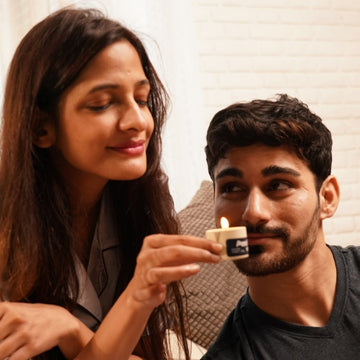
Build a wind-down ritual. A consistent pre-sleep routine teaches your nervous system to transition toward rest. This might include a warm shower, a chapter of a physical book, or a partner massage. MyMuse Glow relaxing massage oil (₹499) can become part of a nightly wind-down ritual that naturally builds both relaxation and connection.
Lock in a consistent schedule. Going to bed and waking at the same times every day -- including weekends -- matters more for sleep quality than total hours. Your circadian rhythm rewards consistency above all else.
Move caffeine to mornings only. Keep tea and coffee to before 2 PM. The afternoon chai ritual is one of the most pervasive and least recognised sleep saboteurs in Indian life.
Cool the room. Your body needs to drop its core temperature to initiate sleep. In Indian climates, this usually means air conditioning or at minimum a quality fan. Aim for 18-22 degrees Celsius.
Address the stress underneath. If racing thoughts or anxiety are keeping you awake, sleep hygiene alone will not solve the problem. Consider a brief journaling practice before bed, progressive muscle relaxation, or professional support from a therapist.
Audit your medications. Certain common prescriptions -- including some antidepressants (SSRIs in particular), beta blockers, and antihistamines -- can impair both sleep architecture and desire simultaneously. If you suspect a medication is contributing to either issue, discuss alternatives with your prescribing doctor.
When Sleep Quantity Is Not the Problem
Some people get 7 or 8 hours in bed yet still wake exhausted. This points to a sleep quality issue rather than a duration issue. Two conditions deserve specific mention:
Obstructive sleep apnoea. Massively underdiagnosed in India, sleep apnoea causes repeated micro-awakenings throughout the night as the airway collapses and reopens. It prevents deep sleep, reduces blood oxygen levels, and has a well-documented, strong association with reduced desire and erectile difficulties in men. If you snore heavily, wake with morning headaches, or feel unrested despite adequate hours in bed, ask your doctor about a sleep study.
Insomnia. Chronic difficulty falling or staying asleep, despite adequate opportunity, affects an estimated 10-15% of the Indian population. It is treatable -- cognitive behavioural therapy for insomnia (CBT-I) has an excellent evidence base and is more effective long-term than medication.
Frequently asked questions
Can weekend sleep catch-up repair the damage?
Partially, but not fully. Research shows that while weekend recovery sleep can improve alertness and mood temporarily, the hormonal deficits created by weeknight sleep deprivation are not fully reversed by two days of extended sleep. The most effective approach is consistent, adequate sleep every night. Sleeping in on weekends can also disrupt your circadian rhythm, making Monday nights even harder.
How quickly will improving my sleep improve my desire?
Some people notice a difference within the first few days of better sleep. Measurable hormonal improvements typically appear within one to two weeks of consistently getting 7-plus hours. The full impact on desire, arousal quality, energy, and overall intimate satisfaction generally develops over three to four weeks of sustained sleep improvement.
Is melatonin supplementation a good idea?
Melatonin can help with sleep onset timing, particularly for people with disrupted circadian rhythms (shift workers, frequent travellers, or chronic late-night phone users). However, it does not directly improve desire -- its benefit comes indirectly through better sleep. Long-term use should be discussed with a doctor, as melatonin can interact with other hormonal systems. It is also not a substitute for addressing the root causes of poor sleep.
My partner and I have mismatched sleep schedules. How do we manage?
Chronotype mismatches (one early bird, one night owl) are one of the most common practical barriers to both intimacy and relationship connection. Solutions include finding overlap periods for connection that are not bedtime-dependent, using weekend mornings for longer intimate encounters, and creating intentional windows for physical closeness rather than relying on the assumption that bedtime proximity will lead to intimacy.
Does exercise help with both sleep and desire?
Yes -- regular moderate exercise is one of the very few interventions that reliably improves both sleep quality and desire simultaneously. It increases the proportion of deep sleep, reduces cortisol, enhances blood flow to all organs, and supports healthy hormone production. The one caveat: avoid intense exercise within 2-3 hours of bedtime, as the physiological arousal can delay sleep onset.
Designed for Real Bodies
Start building a wind-down ritual that serves both your sleep and your intimacy. Products designed for relaxation and connection, delivered with complete discretion.
Explore the Range- 100% Body-Safe Materials
- Discreet Packaging & Billing
- Trusted by 3.75L+ Customers
- 100-Day Warranty
Last updated: April 2026
Prices checked on 03 Oct 2026 on mymuse.in.