








The Myth That Sex Gets Worse After 40 (Studies Show the Opposite)

This content is for informational purposes only and does not constitute medical advice. Consult a healthcare professional for personal guidance.
Key Takeaways
- Large-scale surveys consistently show that intimate satisfaction often increases with age
- Self-knowledge, reduced performance pressure, and better communication are powerful advantages of maturity
- Physical changes after 40 are real but manageable with simple adaptations
- The biggest barrier to great intimacy after 40 is the cultural belief that it should be declining
- Couples who adapt rather than resign report some of their most fulfilling experiences in their forties and fifties
Somewhere around your late thirties, the messaging begins. A friend jokes about the death of their intimate life. Social media treats forty as the beginning of the end for desire. The cultural script is relentless: intimacy peaks in youth, and everything after is a slow, sad decline.
Except that is not what the research shows. At all. Multiple large-scale studies have found that intimate satisfaction frequently increases with age, particularly for women. The mechanics may change, the frequency may shift, but the quality of experience -- the depth of connection, the consistency of pleasure, the comfort with one's own body -- often reaches new heights in the decades that culture has written off.
This matters in India perhaps more than anywhere, because the cultural desexualisation of anyone past a certain age is exceptionally aggressive here. The moment you become a parent, and certainly by the time you become a grandparent, the assumption is that your intimate life is either nonexistent or irrelevant. That assumption is wrong, and it causes real harm.
What the Science Actually Says
A landmark study published in the American Journal of Medicine examined intimate satisfaction across age groups and found something researchers did not expect. Women in their forties and fifties reported higher orgasm consistency, greater comfort expressing their needs, and higher overall satisfaction compared to younger women. The frequency of encounters decreased with age -- but frequency and satisfaction are not the same metric.
This finding has been replicated across multiple countries and populations. A 2023 survey of over 8,000 adults found that people aged 40-65 rated their intimate experiences as more emotionally fulfilling than any other age group. They were less likely to report performance anxiety, less likely to fake enjoyment, and more likely to communicate openly about preferences.
For men, the picture is nuanced. Physical changes like altered erectile response and longer recovery times are common after forty. But men who adapted to these changes -- rather than treating them as failures -- reported satisfaction comparable to younger men. The critical variable was not physical performance but psychological flexibility.
Why It Often Gets Better
Self-Knowledge Replaces Guesswork
By forty, you have spent two decades learning your body. You know what works, what does not, and what you are curious about. The fumbling uncertainty of youth is replaced by a quiet confidence that makes every encounter more efficient and more satisfying. You are less likely to endure something unpleasant to please a partner and more likely to guide the experience toward mutual enjoyment.
Performance Anxiety Fades
The tyranny of comparison peaks in youth and gradually loosens its grip. Am I good enough? Am I normal? Is my body acceptable? These questions consume enormous mental bandwidth during intimacy, and they are at their loudest in your twenties and thirties. By forty, many people have made peace with their bodies -- not perfectly, but sufficiently -- and that mental freedom translates directly into more present, more pleasurable experiences.
Communication Deepens
Long-term couples who have built healthy communication patterns have an extraordinary advantage. The ability to say "I love when you do this" or "Let us try something different" without fearing rejection is transformative. Even people entering new relationships at forty tend to communicate more directly about needs, having learned the cost of silence.
The Definition of Intimacy Expands
In your twenties, the cultural script narrows intimacy to a single act and a single goal. By forty, many couples naturally expand this definition. Extended foreplay becomes the main event. Massage becomes intimacy. Touch, kissing, holding -- acts dismissed as insufficient in the urgency of youth -- reveal themselves as deeply satisfying. This expansion is not settling. It is sophistication.
The Physical Changes: Honest and Practical
For Women
Perimenopause typically begins in the early to mid-forties, bringing fluctuating estrogen levels that affect lubrication and vaginal elasticity. After menopause, these changes become more pronounced. The solution is straightforward. A quality lubricant like MyMuse Glide (₹699) addresses dryness immediately. Regular intimate activity promotes blood flow and maintains vaginal health. Pelvic floor exercises support tone and sensation. For significant discomfort, a gynaecologist can discuss localised hormone options.
For Men
Testosterone declines at roughly 1% per year after thirty. Erections may require more direct stimulation and take longer to achieve. Spontaneous erections become less frequent. The refractory period extends. None of this means the end of satisfying intimacy -- it means the approach needs to evolve. Extended foreplay benefits both partners. The expectation of instant, maximal hardness is a young person's framework that was never particularly realistic to begin with.
For Both
Chronic conditions (diabetes, hypertension, cardiovascular issues, joint pain) become more common and can affect intimate function. Many medications carry side effects that impact desire or arousal. The critical action is discussing these effects with your doctor, because alternatives or dosage adjustments often exist. Suffering in silence is never the answer.
The Indian Context
In India, the challenges around ageing and intimacy have a distinctive cultural dimension. The joint family system means privacy remains scarce well into middle age. Cultural narratives, particularly for women, are aggressively desexualising -- mothers and grandmothers are treated as beings beyond desire. And the absence of open conversation means age-related changes go unaddressed.
Indian women approaching menopause are particularly underserved. Vaginal dryness, reduced desire, and discomfort are treated as natural consequences to be silently endured. The idea that a woman in her fifties might use a lubricant or seek help for her intimate life still invites judgement in many communities. This needs to change. Pleasure is not age-limited. The desire for connection is lifelong.
For Indian men, the pressure to perform remains intense at every age, and the shame around any change in erectile function can be devastating. Cultural norms discourage men from discussing these issues, leaving many suffering alone rather than seeking simple, effective solutions. Understanding that changes are normal and manageable -- not signs of failure -- is a message that desperately needs amplifying.
Practical Steps for Thriving After Forty
- Prioritise general health. Cardiovascular fitness directly affects intimate function. Regular exercise, a balanced diet, adequate sleep, and stress management are the foundation.
- Talk to each other. If something has changed, name it. Share what you need, ask what your partner needs. The conversation might feel awkward at first but it is far less painful than silent deterioration.
- Talk to your doctor. Bring up intimate health at your next check-up. Ask about medication side effects. Request hormone testing if you suspect imbalances. Your doctor has heard it all before.
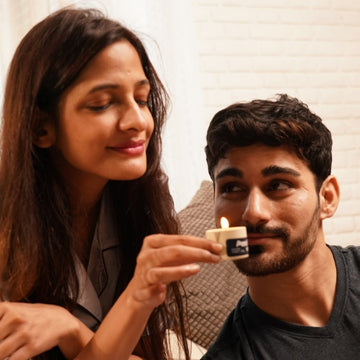
- Experiment. Trying new things keeps intimacy fresh at any age. A massage candle like MyMuse Melt can add a sensory dimension that revitalises a familiar routine.
- Release the comparison. Stop measuring yourself against your twenty-year-old self or against cultural ideals. The body you have now is the body you get to experience pleasure with. Work with it, not against it.
Frequently asked questions
Is it normal to have less frequent intimacy after 40?
Yes. Frequency typically decreases with age, and this is completely normal. What matters more is satisfaction. Many couples find that less frequent but more intentional encounters are more fulfilling than frequent but routine ones. Quality consistently outranks quantity in satisfaction studies.
My partner and I have not been intimate in months. Is it too late?
It is never too late. Start by rebuilding physical affection through non-sexual touch: holding hands, cuddling, massage. Let physical closeness build naturally rather than jumping straight to intercourse. If anxiety or tension has built up, a few sessions with a couples therapist can help bridge the gap.
Should I see a doctor about changes in function after 40?
If changes cause distress or affect quality of life, absolutely. Vaginal dryness, erectile changes, reduced desire, and pain during intimacy all have medical solutions. Do not assume discomfort is an inevitable part of ageing -- it is often treatable.
Can intimacy after 40 genuinely be better than in your 20s?
For many people, yes. The combination of self-knowledge, reduced anxiety, better communication, and emotional depth creates conditions for deeply satisfying experiences. Research supports this -- satisfaction scores often peak in middle age even as frequency decreases.
How can I address vaginal dryness without a doctor visit?
A high-quality water-based lubricant is the simplest and most effective first step. Regular intimate activity or self-pleasure promotes blood flow and helps maintain vaginal health. Staying hydrated and avoiding harsh soaps in the intimate area also helps. If dryness is severe or persistent, a gynaecologist can discuss additional options.
- Research-Backed Information
- Reviewed by Health Professionals
- Discreet Packaging on All Orders
- Trusted by 3.75L+ Customers
Ready to Explore?
Whether you are 25 or 55, MyMuse supports your intimate wellness with body-safe products, discreet delivery, and zero judgement.
Check It OutLast updated: April 2026
Prices checked on 03 Oct 2026 on mymuse.in.