




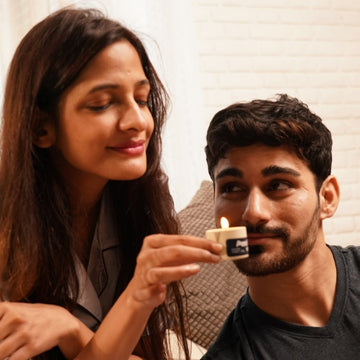





Role Play Ideas for Couples: Beginner-Friendly Scenarios

This content is for informational purposes only and does not constitute medical advice. Consult a healthcare professional for personal guidance.
You're mid-conversation about what to watch on Netflix when your partner suddenly says, "What if we tried something... different tonight?" Your heart skips. Not because anything's wrong—quite the opposite. You've been reading about how role play can shake things up, but the idea feels intimidating. Do you need costumes? A script? What if you laugh at the wrong moment?
Here's the truth: role play doesn't require acting classes or elaborate props. It's simply about stepping into a different version of yourselves—one where you can express desires more freely, explore new dynamics, and hit the reset button on routine. Research shows that novelty activates the brain's reward system similarly to early relationship stages, flooding you with dopamine and reigniting that electric feeling. And the best part? You can start ridiculously simple.
The couples who swear by role play aren't necessarily the adventurous types. They're regular people who discovered that pretending to be strangers at a coffee shop or playing boss-and-assistant creates a safe container for desires they couldn't quite articulate otherwise. Let's explore how to dip your toes in without feeling ridiculous.
Key Takeaways
- Role play works by creating psychological distance, making it easier to explore desires without self-consciousness
- Start with scenarios close to reality (strangers meeting, hotel guests) before moving to fantasy roles
- The "character" gives you permission to behave differently than your everyday self
- Successful role play depends more on commitment and communication than costumes or props
- Even 10 minutes of sustained character can significantly boost arousal and connection
Why Role Play Actually Works (The Psychology Behind It)
Therapists call it "psychological distancing"—when you're playing a character, there's less pressure on your actual self. That flirty stranger at the bar isn't really *you*, so you can be bolder. The nervous hotel guest checking in alone isn't carrying your everyday insecurities.
This matters because most long-term couples develop unspoken scripts. You know each other's moves. You've settled into comfortable patterns. Role play disrupts those patterns without threatening the relationship itself. You're still with your partner, but you're accessing different parts of yourselves—the parts that might want to be pursued, dominated, seduced, or surprised.
Studies on sexual satisfaction consistently show that novelty and variety correlate with higher desire levels. But here's the clever bit: you don't need a new partner for novelty. You just need a new dynamic. That's exactly what role play provides—a vacation from your usual selves without actually leaving the relationship.
Beginner-Friendly Scenarios (Zero Experience Required)
The Strangers Scenario
This one's perfect if you've never tried role play before. Meet at a café or bar as if you don't know each other. One of you arrives first, the other approaches. Use different names if you want. The beauty here is that you're essentially recreating your first meeting—all that delicious uncertainty and anticipation.
Why it works: You're playing versions of yourselves, just before all the familiarity set in. There's no costume required, no elaborate backstory. Just the thrill of pursuit and being pursued.
The Hotel Guest Fantasy
One of you checks into a hotel room (or just pretends your bedroom is one). The other arrives later—maybe you're having an affair, maybe it's a forbidden encounter. The scenario is deliciously vague on purpose, letting you fill in the details.
This works brilliantly in India because hotel rooms already carry a certain charge—they're spaces of privacy and possibility. You're borrowing that energy without needing to actually book a room every time (though occasionally doing so definitely ups the ante).
The Boss and Employee Dynamic
Power play is one of the most common fantasies, and this scenario makes it accessible. One person is the authority figure, the other is nervous about a "performance review" or "staying late to finish a project." The tension builds naturally.
The appeal is obvious: in real life, we rarely get to explore power dynamics this directly. Here, you can lean into dominance or submission in a clearly defined, time-limited way. Once you break character, the power dynamic dissolves—it's just play.
The Photography Session
One of you is a photographer, the other is the subject of a "private shoot." This naturally involves direction ("turn this way," "look at me"), which creates delicious tension. It's also a great excuse to focus entirely on one partner's body and responses.
This scenario sidesteps the performance anxiety some people feel during intimacy. When you're the "model," you're supposed to be looked at, admired, directed. When you're the "photographer," you have a reason to be bossy and specific about what you want.
The Massage Therapist
This one works beautifully because it has a built-in progression. Book an appointment for a "professional massage" at home. The therapist maintains boundaries... until they don't. The slow escalation from professional to personal creates incredible anticipation.
Bonus: you can actually incorporate a body-safe massage product to make the physical sensations even more intense. The combination of touch, oil or lotion, and the forbidden element of crossing professional boundaries hits multiple arousal triggers at once.
Making It Work (Practical Tips From Real Couples)
Start Outside the Bedroom
The couples who succeed with role play often begin the scenario before anyone's undressed. Text each other in character during the day. If you're doing the strangers scenario, actually meet somewhere outside your home. The longer you sustain the fiction, the more your brain buys into it.
Use Props Sparingly
You don't need costumes for your first attempt. A single prop can work wonders—glasses for the "boss," a towel for the "massage therapist," a room key for the "hotel guest." Your imagination does the heavy lifting; the prop just anchors it.
Don't Break Character (Until You Do)
Yes, you might laugh. That's fine. But try to stay in character even through the awkwardness. The commitment itself is arousing. Your partner sees you trying, being vulnerable, putting yourself out there—that's incredibly attractive.
When you do break character, make it intentional. Some couples use their safe word not just for discomfort but also to signal "okay, we're ourselves again." That clear boundary between play and reality helps you go deeper into the role.
Debrief Afterwards
This is the unsexy but crucial part. Talk about what worked, what felt weird, what you'd try again. Role play improves dramatically with practice, but only if you're learning from each attempt. This doesn't need to be a formal conversation—even a quick "that was fun when you..." while you're still catching your breath helps.
The Indian Context (What Makes Role Play Different Here)
Let's acknowledge the elephant in the room: privacy. Many Indian couples live with family or have thin walls. Role play requires a certain freedom to make noise, stay in character, and not worry about interruptions.
This is exactly why hotel scenarios work so well here—they're not just fantasy, they're practical solutions. Booking a room for a night (or even a few hours at some hotels) gives you the privacy to experiment without self-censoring.
The other reality is that many of us weren't taught to talk openly about desire. Role play offers a workaround. It's easier to say what you want when you're in character. The boss can demand things your everyday self might feel shy requesting. The stranger can be forward in ways that feel foreign to your usual dynamic.
Quick Take
Role play isn't about becoming someone else entirely—it's about accessing different parts of yourself that everyday life doesn't let you express. Start with scenarios close to reality, commit fully even if it feels silly, and use the character as permission to communicate desires you might otherwise keep quiet. The couples who stick with it report not just better intimate lives, but better communication overall. When you've pretended to be strangers falling into bed together, talking about whose turn it is to do dishes feels a lot less daunting.
Enhancing the Experience
Once you've tried a basic scenario and want to deepen the experience, small additions make a surprising difference. Sensory elements—textures, temperatures, sensations—anchor you in the moment and make the fantasy feel more real.
For massage scenarios or any role play involving extended touch, products designed for intimate wellness can genuinely enhance things. A body-safe lubricant or massage oil makes touch feel more luxurious and intentional. The physical sensation supports the psychological scenario—you're not just pretending, you're actually experiencing something heightened.
Similarly, if your scenario involves a power dynamic where one person is being "teased" or made to wait, incorporating a personal massager adds a tangible element to the anticipation. The person in the dominant role controls not just the narrative but actual physical sensation. That combination of psychological and physical control is what makes power play scenarios so effective.
Common Hesitations (And Why They Don't Matter)
"I'll feel ridiculous." You probably will, at first. Everyone does. The magic happens when you push through that initial awkwardness. Your partner is likely feeling equally silly, which actually creates intimacy—you're being vulnerable together.
"I'm not good at acting." Nobody's asking you to win awards. You just need to maintain a basic premise for a little while. If you can pretend to be interested in your boss's boring meeting, you can pretend to be a stranger at a bar.
"What if we laugh?" Then you laugh. The couples who enjoy role play most are usually the ones who can giggle mid-scene and then get right back into it. Laughter doesn't mean failure; it means you're comfortable enough to be imperfect together.
"We don't have the right... stuff." You really don't need much. Your bedroom can be a hotel room. Your kitchen can be an office. Your imagination is doing the real work; the setting just supports it.
When to Take It Further
Once you've tried a few basic scenarios and they're working, you can gradually add complexity. More elaborate backstories. Costumes that feel more removed from your everyday selves. Scenarios that explore deeper power dynamics or fantasies.
But there's absolutely no rush. Some couples find one or two scenarios they love and return to them repeatedly, just varying the details. The stranger scenario can happen at different locations. The hotel guest can have different reasons for being there. You're not trying to constantly top yourselves—you're finding what reliably works and enjoying it.
Frequently Asked Questions
How do I bring up role play with my partner without making it awkward?
Start by sharing something you read or watched. "I came across this article about role play for couples—have you ever thought about trying something like that?" presents it as a mutual exploration rather than a request. If they're hesitant, suggest starting incredibly simple: "What if we pretended we're on our first date next time we go out?" Low stakes, high potential.
What if my partner thinks role play is silly or unnecessary?
Fair question. Not everyone is wired for fantasy play, and that's okay. But sometimes hesitation comes from not understanding what it actually involves. Explain that it's not about dissatisfaction with your current intimate life—it's about adding variety. If they're still not interested, respect that boundary. You can explore novelty in other ways: new locations, new times of day, new forms of touch. Role play is one tool, not the only one.
Do we need to plan everything in advance or can it be spontaneous?
Both approaches work, but for beginners, some advance planning helps. Agree on the basic scenario and any boundaries beforehand, then let the details unfold naturally. Once you're more comfortable, you can absolutely surprise each other—texting "I'll be at Café Coffee Day at 7, pretend you don't know me" can be thrilling. But that works better when you've already established that you both enjoy this type of play.
How long should a role play scenario last?
However long feels natural. Some couples sustain a scenario for hours—texting in character throughout the day, meeting as strangers, letting it build slowly. Others maintain the fiction for 15-20 minutes before transitioning to their regular selves. There's no right answer. Start shorter if you're nervous; you can always extend it next time if you're having fun.
What if one person wants to try more intense scenarios than the other?
This is where communication becomes crucial. The person wanting more intensity should move at the pace of the more cautious partner. Role play only works when both people feel safe and enthusiastic. Start with milder versions of the fantasy—if someone wants to explore dominance, begin with something gentle like the boss/employee scenario before moving toward anything more intense. Regular check-ins about comfort levels keep you both on the same page.
Ready to Explore?
Role play opens doors to new dynamics, deeper communication, and that electric feeling of discovery. Whether you start with a simple strangers scenario or go straight for the boss's office, the key is showing up with curiosity and leaving judgment at the door. Our collection of intimate wellness products can support whatever scenarios you dream up—all delivered in completely discreet packaging.
Explore MyMuse- 100% Body-Safe Materials
- Discreet Packaging & Billing
- Trusted by 3.75L+ Customers
- 100-Day Warranty
- 100% Body-Safe Materials (Platinum-Grade Silicone)
- Discreet Packaging & Billing
- Trusted by 3.75L+ Customers Across 1,900+ Cities
- 100-Day Warranty on All Products
Last updated: April 2026