








How to Use Massage Oil for Intimate Couples Massage

This content is for informational purposes only and does not constitute medical advice. Consult a healthcare professional for personal guidance.
Key Takeaways
- Choose a body-safe massage oil specifically formulated for intimate use. Avoid essential oils or kitchen oils that can irritate sensitive skin
- Set the mood first: warm the room, dim the lights, and communicate openly about boundaries before you begin
- Start with non-intimate areas to build comfort and connection before moving to more sensitive zones
- Use slow, intentional strokes with firm but gentle pressure. This isn't about speed or technique perfection
- Keep a warm towel nearby for cleanup and to wipe hands if you plan to transition to other activities
You've probably seen massage oil mentioned in wellness articles or noticed it while browsing intimate care products. Maybe you're curious about adding something new to your relationship, or maybe you just want a simple way to feel more connected with your partner without the pressure of "performing." Either way, you're not alone in wondering how this actually works in real life, not the movie version, but the version where you're figuring out logistics and hoping it doesn't feel awkward.
Here's the truth: a couples massage with the right oil can be incredibly intimate, relaxing, and connective. It's less about perfect technique and more about intention, presence, and touch. You don't need to be a massage therapist. You just need a little guidance on the practical stuff, what oil to use, how to start, what actually feels good, and that's exactly what we're covering here.
Step-by-Step Guide: How to Use Massage Oil for Intimacy
Choose the Right Massage Oil
Not all oils are created equal, especially for intimate use. You want something that's body-safe, non-sticky, and ideally formulated for sensitive skin. Skip the coconut oil from your kitchen, while it's fine for some external use, it can disrupt your body's natural pH and isn't compatible with latex protection if you plan to transition to other activities. Look for oils labeled as "intimate massage oil" or "couples massage oil" that are water-based or designed to rinse off easily. Check the ingredients: avoid anything with synthetic fragrances, parabens, or ingredients you can't pronounce. Your skin absorbs what you put on it, so quality matters here.
Set the Scene (This Matters More Than You Think)
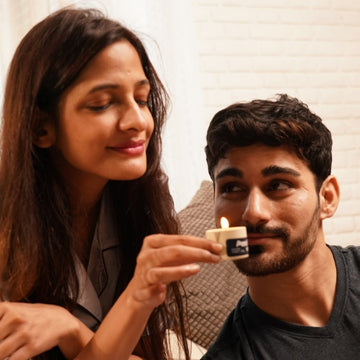
You know how a cold room or harsh overhead lighting can kill the mood? That applies here too. Warm up the space first. There's nothing romantic about goosebumps from being chilly. Dim the lights or use candles (our Massage Candle doubles as both ambiance and massage oil, which is genuinely convenient). Put on some instrumental music or something without lyrics that'll distract you. Lay down a towel on the bed or wherever you're doing this. Massage oil will stain nice sheets, and you don't want to be worried about laundry mid-massage. Have everything within arm's reach: oil, tissues or a warm damp towel, maybe some water to sip.
Warm the Oil First
Cold oil hitting warm skin is jarring and not in a good way. Pour a small amount (start with a coin-sized amount. You can always add more) into your palms and rub your hands together for 10-15 seconds. This warms the oil and also gives you a second to check the consistency. If it feels too thick, warm it a bit more. If it's too thin, you might need less. The oil should glide smoothly without dragging on the skin, but it shouldn't be so slippery that you lose all friction. Pro tip: if you're using a massage candle, the melted wax is already warm when you pour it, which is one less thing to think about.
Start with Safe, Comfortable Areas
Don't dive straight into intimate zones. Start with the back, shoulders, or feet, areas where your partner can relax without feeling vulnerable right away. Use long, slow strokes with your whole hand, not just your fingertips. Apply gentle but firm pressure; too light feels ticklish, too hard feels painful. Pay attention to how their body responds. Are they tensing up or melting into your touch? Adjust accordingly. This beginning phase is about building trust and comfort. It's also where you figure out the rhythm that works for both of you. There's no timer here, spend as long as feels good.
Communicate Throughout
This isn't the time to guess what your partner likes. Ask simple questions: "Does this pressure feel good?" "Want me to spend more time here?" "Too much oil or should I add more?" You'd be surprised how much anxiety dissolves when someone just says what they need. If you're the one receiving, don't stay silent hoping your partner reads your mind. A simple "that feels amazing" or "a little lighter, please" makes the whole experience better for both of you. Communication isn't unromantic. It's the thing that makes intimacy actually intimate instead of performative.
Transition Slowly to More Intimate Areas
If you both want to move toward more sensitive zones, do it gradually. The inner thighs, lower stomach, chest, and neck are all areas that can feel incredibly intimate without jumping straight to genitals. Use the same slow, intentional touch. Check in verbally or read body language, if your partner's breathing changes, if they're leaning into your touch, those are good signs. If they seem tense or distracted, maybe stay where you are a bit longer. The goal isn't to rush toward a destination; it's to enjoy the journey. Some couples keep it entirely non-genital and that's completely valid. Others let it naturally progress. There's no script here.
Have a Plan for Cleanup
This is the unsexy part no one talks about, but it matters. Keep a warm, damp towel within reach so you can wipe your hands if needed, especially if you're transitioning to activities where you want less slipperiness or need to handle protection. Some oils are easier to clean than others; water-based formulas rinse off more easily than oil-based ones. If you're worried about sheets, lay down a dedicated towel or blanket you don't mind getting stained. A little practical planning means you can stay in the moment instead of panicking about logistics afterward.
Expert Tips for a Better Experience
Products That Pair Well with Couples Massage
Massage Candle
This does double duty: creates ambiance while burning, then melts into a warm massage oil you can pour directly onto skin. The formula is specifically designed to melt at a skin-safe temperature, so you don't have to worry about burns. It's made with natural ingredients and has a subtle scent that enhances the mood without being overwhelming. Genuinely one of the most practical products for couples new to massage. It removes the guesswork around warming oil separately.
Best For: Setting the mood, couples massageTickle
While not a massage oil, this soft feather tickler complements massage beautifully. Use it between massage strokes to vary sensation or as a gentle tease along areas you've just massaged. The dual-ended design gives you options for different textures. It's small enough to keep nearby without cluttering your setup, and it adds an element of playful anticipation without requiring any skill or practice.
Best For: Sensory play, couplesPlayful Cards
If you're feeling a bit awkward or unsure how to start the conversation about trying couples massage, these cards can be a low-pressure icebreaker. Some prompts specifically suggest sensory experiences or touch-based activities. You can use them before your massage session to set intentions or talk about boundaries, which makes the actual massage feel more comfortable because you've already opened that communication channel.
Best For: Couples, ice-breaker, giftingFrequently Asked Questions
What's the difference between regular massage oil and intimate massage oil?
Intimate massage oils are formulated specifically for sensitive skin and are typically pH-balanced, hypoallergenic, and free from harsh chemicals or synthetic fragrances that could cause irritation in delicate areas. They're also usually designed to be compatible with your body's natural chemistry and safe if they come into contact with mucous membranes. Regular massage oils, like the ones used at spas, may contain essential oils, synthetic fragrances, or thicker formulas that are fine for back and shoulders but not ideal for intimate zones. If you're keeping the massage non-genital, a good quality spa massage oil can work, but for full-body intimate massage, use products designed for that purpose.
Can we use cooking oils like coconut or olive oil?
You can, but it's not ideal. Coconut oil is popular because it's accessible and smells nice, but it can disrupt vaginal pH, potentially leading to infections. It's also not compatible with latex protection, oil degrades latex, which means your barrier protection becomes unreliable. Olive oil has similar issues plus it's heavier and harder to clean. If you're in a pinch and only doing external, non-genital massage, refined coconut oil is safer than unrefined, but honestly, a proper intimate massage oil is affordable and formulated to avoid these problems. It's worth the small investment for something designed for what you're actually using it for.
How much oil should we use?
Start small, about the size of a coin (roughly a teaspoon) for one area like the back or shoulders. You can always add more, but if you use too much upfront, everything becomes too slippery and you lose the friction that makes massage feel good. Pour it into your palms, warm it by rubbing your hands together, then apply. As the oil absorbs or spreads, add another small amount as needed. For a full-body massage, you'll probably use 2-3 tablespoons total, but build up to that gradually rather than dumping it all at once.
What if one of us has sensitive skin or allergies?
Do a patch test first. Apply a small amount of the oil to the inner forearm and wait 24 hours to see if there's any reaction. Look for oils labeled hypoallergenic and fragrance-free if sensitivity is a concern. Avoid anything with essential oils, synthetic fragrances, or long ingredient lists full of chemicals. Water-based formulas tend to be gentler than oil-based ones. If you have a known allergy to nuts, avoid oils derived from almonds or other tree nuts. When in doubt, start with the smallest amount possible and check the ingredients list against known allergens.
Is couples massage supposed to lead to other intimate activities?
Not necessarily, and that expectation can actually create pressure that kills the mood. Some couples use massage purely for relaxation and connection without any agenda beyond that. Others find it naturally progresses to other forms of intimacy. Both are completely valid. The key is not to start with a fixed destination in mind. Talk beforehand about whether this is just about relaxation, whether you're both open to where it might lead, or whether you're specifically hoping it becomes more. Removing the pressure of "this has to end a certain way" often makes the whole experience more enjoyable and, ironically, more likely to naturally evolve if that's what you both want.
Final Thoughts
Learning how to use massage oil for intimacy isn't complicated, but it does require a bit of intentionality and communication, two things that benefit every aspect of a relationship anyway. Start simple, pay attention to what feels good, and remember that there's no performance standard you're trying to meet. This is about connection, not perfection. The practical stuff, warming the oil, choosing body-safe products, having towels ready, matters because it lets you stay present instead of distracted by logistics. The emotional stuff, checking in, reading cues, trading roles, matters because that's what transforms a basic massage into genuine intimacy.
Ready to explore?
Browse our collection of intimate wellness products designed for couples looking to deepen connection and explore new experiences together.
Explore the Range- 100% Body-Safe Materials
- Discreet Packaging & Billing
- Trusted by 3.75L+ Customers
- 100-Day Warranty
- 100% Body-Safe Materials (Platinum-Grade Silicone)
- Discreet Packaging & Billing
- Trusted by 3.75L+ Customers Across 1,900+ Cities
- 100-Day Warranty on All Products
Last updated: April 2026