











Different Types of Orgasms: A Neuroscientist Maps the Pleasure Pathways

This content is for informational purposes only and is not a substitute for professional medical advice. Always consult a qualified healthcare provider with questions about your health.
Key Takeaways
- Orgasms are not a single phenomenon — at least four distinct nerve pathways carry pleasurable sensations to the brain
- The clitoral-vaginal debate is outdated; neuroscience shows these are different routes to similar brain activation
- Blended orgasms, which activate multiple pathways simultaneously, are reported as the most intense by most people
- Exercise-induced and sleep orgasms are real, documented phenomena with physiological explanations
- There is no hierarchy — different types are not "better" or "more mature" than others
The Orgasm Debate That Won't Die
In 1905, Sigmund Freud declared that clitoral orgasms were "immature" and that "real" women experienced only vaginal orgasms. It was a pronouncement that would shape how people thought about pleasure for over a century — and it was, to put it plainly, wrong.
The damage of that declaration is still being undone. Even today, the most common question people ask about orgasms is some version of: "Am I having the right kind?" As though pleasure came with a grading rubric.
Modern neuroscience has given us a much more interesting — and much less judgmental — picture. Instead of ranking orgasms on a hierarchy of sophistication, researchers now map the actual nerve pathways involved. What they've found is that the human body has multiple routes to orgasm, each travelling through different nerves, activating overlapping but distinct brain regions, and producing subtly different sensations.
This isn't just academic trivia. Understanding these pathways changes how you approach pleasure, removes unnecessary shame, and opens up possibilities that many people never knew existed.
The Four Nerve Pathways: Your Body's Pleasure Highways
Before we discuss specific types of orgasms, you need to understand the infrastructure. Think of your nervous system as a highway network. Pleasurable sensations from different body regions travel along different highways to reach the brain. Neuroscience has identified four major routes:
The Pudendal Nerve
This nerve serves the clitoris, the penis, and the perineum. It's the most well-studied pleasure pathway, partly because the anatomy is most accessible. The pudendal nerve carries signals to the sacral spinal cord and then up to the brain's sensory cortex. When people describe sharp, focused, building sensations, they're often describing pudendal nerve activation.
The Pelvic Nerve
The pelvic nerve serves the vagina, cervix, rectum, and bladder. It travels a slightly different route to the brain, synapsing in different spinal cord segments. Sensations carried by the pelvic nerve are often described as deeper, more diffuse, and more whole-body. This nerve is key to understanding why vaginal and cervical stimulation produces qualitatively different sensations than clitoral stimulation — it's literally a different highway.
The Hypogastric Nerve
Less discussed but equally important, the hypogastric nerve serves the uterus, cervix, and prostate. It connects to the thoracolumbar spinal cord. Researchers believe this pathway contributes to the deep, pressure-based sensations that some people experience during cervical or prostate stimulation.
The Vagus Nerve
This is the most surprising one. The vagus nerve bypasses the spinal cord entirely, running directly from the cervix (and other organs) to the brainstem. This discovery was groundbreaking because it explained something that had puzzled researchers for decades: why some people with complete spinal cord injuries could still experience orgasm. The vagus nerve provides an alternate route that doesn't need the spinal cord at all.
Clitoral Orgasms: The Most Common Starting Point
The clitoris is the only human organ that exists solely for pleasure. With over 10,000 nerve endings concentrated in a structure that extends far beyond the visible glans, it's essentially a sophisticated pleasure organ.
What most people don't realise is that the clitoris is much larger than what's visible externally. The complete structure includes two crura (legs) that extend along either side of the vaginal canal and two vestibular bulbs that engorge with blood during arousal. The entire structure is roughly 9-11 centimetres when mapped fully.
Clitoral orgasms, primarily mediated by the pudendal nerve, are characterised by:
- Localised, intense sensation that builds progressively
- Clear arousal arc — most people can sense the approach of orgasm
- Rhythmic contractions of the pelvic floor muscles
- Relatively quick refractory period, making multiple orgasms more accessible
Research consistently shows that direct or indirect clitoral stimulation is involved in the majority of orgasms people with vulvas experience. This is not a limitation — it's anatomy. The clitoral network is the primary pleasure infrastructure, and there's nothing "basic" about using it.
Vaginal Orgasms: The Internal Pathway
Here's where the historical debate gets interesting. For decades, researchers argued about whether vaginal orgasms were "real" or simply clitoral orgasms triggered by indirect stimulation of the internal clitoral structure.
Modern imaging studies suggest the answer is: both are happening. The anterior vaginal wall sits directly adjacent to the internal clitoral structure. When this area is stimulated, it activates both the pelvic nerve (from the vaginal tissue itself) and the pudendal nerve (from the internal clitoral tissue being compressed). Brain imaging shows that vaginal stimulation activates slightly different cortical regions than direct clitoral stimulation, suggesting these really are distinct — if overlapping — experiences.
People who experience vaginal orgasms often describe them as:
- Deeper and more diffuse than clitoral orgasms
- Involving a sense of fullness or pressure
- Sometimes building more gradually
- Often accompanied by stronger emotional responses
The key point is that not everyone experiences vaginal orgasms, and that's completely normal. Vaginal tissue has far fewer nerve endings than the clitoris. Individual anatomy varies significantly — the distance between the clitoral glans and the vaginal opening, the density of nerve endings in the vaginal walls, and the exact position of the internal clitoral structure all differ from person to person.
Blended Orgasms: When Pathways Converge
When multiple nerve pathways activate simultaneously, the result is what researchers call a blended orgasm. This typically happens when clitoral and vaginal stimulation occur at the same time, activating both the pudendal and pelvic nerves in concert.
In brain imaging studies, blended orgasms show the most widespread cortical activation — more brain regions light up compared to stimulation of either area alone. This may explain why people who experience blended orgasms often rate them as the most intense.
Blended orgasms are not a special achievement or an advanced skill. They're simply what happens when your body receives pleasure signals through multiple channels simultaneously. Many people experience them naturally during partnered intimacy without specifically trying.
Cervical Orgasms: The Deep Pathway
Cervical orgasms are perhaps the most polarising type. Some people describe them as the most profound physical experiences they've ever had. Others find cervical stimulation uncomfortable or painful. The difference likely comes down to arousal state, individual anatomy, and the unique involvement of both the hypogastric and vagus nerves.
The cervix is innervated by three of the four major pleasure nerve pathways — the pelvic, hypogastric, and vagus nerves. This triple innervation may explain why cervical orgasms, when they occur, are often described as full-body experiences with emotional intensity that surprises people.
An important note: the cervix is relatively insensitive when not fully aroused. Attempting cervical stimulation too early in an encounter is often uncomfortable. Full arousal causes the uterus to elevate (a process called tenting) and the cervix to soften, making stimulation more likely to be pleasurable.
Cervical orgasms require patience, full arousal, and gentle, sustained pressure rather than rapid movement. They're not something to "achieve" — they're something to discover, if your body happens to respond to that type of stimulation.
Exercise-Induced Orgasms: Not a Myth
If you've ever felt a surprising rush of pleasure during an intense core workout, you're not imagining things. Exercise-induced orgasms, sometimes called "coregasms," are a documented phenomenon that affects an estimated 5-10% of people who exercise regularly.
Research led by Debby Herbenick at Indiana University confirmed that certain exercises — particularly those involving intense core engagement, hanging leg raises, and climbing exercises — can trigger orgasm or orgasm-like sensations. The mechanism appears to involve rhythmic contraction and release of pelvic floor muscles during intense abdominal exercise.
These aren't necessarily "full" orgasms in every case. Many people report what researchers call exercise-induced sexual pleasure (EISP) — pleasurable genital sensations during exercise that may or may not reach the threshold of orgasm. The exercises most commonly associated with this include:
- Captain's chair leg raises
- Hanging leg raises
- Rope climbing
- Intense cycling, particularly with certain seat positions
- Yoga poses that engage the pelvic floor, like boat pose
Sleep Orgasms: Your Brain's Solo Act
Nocturnal orgasms — orgasms that occur during sleep — are far more common than most people realise, and they happen across all genders. Research from Alfred Kinsey's original studies through to modern sleep lab research shows that roughly 40% of women and 83% of men have experienced at least one orgasm during sleep by the time they reach middle age.
Sleep orgasms typically occur during REM sleep, when brain activity is high and the genitals naturally engorge with blood (this happens every REM cycle, regardless of dream content). The brain essentially generates an orgasm internally, without any physical stimulation whatsoever.
This is actually one of the most compelling pieces of evidence that orgasm is fundamentally a brain event. The nerve pathways we discussed earlier are the usual routes, but the brain can generate the experience on its own. People with complete spinal cord injuries have reported sleep orgasms, further supporting the idea that the brain has its own orgasm-generating capacity independent of peripheral nerve signals.
The Hierarchy Problem
The most harmful idea in this entire conversation is the notion that some orgasms are "better" or "more evolved" than others. This hierarchy — which can be traced directly back to Freud's unsupported claims — has caused decades of unnecessary anxiety.
Here's what the science actually says: there is no hierarchy. Different types of orgasms involve different nerve pathways and produce different subjective experiences, but none is objectively superior. A person who exclusively experiences clitoral orgasms has the exact same orgasm capacity as someone who experiences multiple types. The nerve pathways they use most are simply different.
The fixation on "achieving" particular types of orgasms often becomes counterproductive. Research on sexual satisfaction consistently shows that the factors most strongly correlated with pleasure are:
- Presence and mindfulness during intimate experiences
- Communication between partners
- Adequate arousal time (most people rush)
- Absence of performance pressure
- General physical comfort and safety
Notice that "type of orgasm" doesn't appear on that list.
Expanding Your Map
If you're curious about exploring different types of sensation, the approach that works best isn't goal-oriented ("I must achieve a cervical orgasm") but curiosity-driven ("What does this type of touch feel like?"). Remove the pressure of a specific outcome and focus on the process of discovery.
Some practical suggestions for exploration:
Vary your approach. If you always use the same type of stimulation, try something different. Not to "upgrade" but simply to expand your sensory vocabulary. Different positions, different pressures, different rhythms all activate slightly different combinations of nerves.
Give arousal time. Many types of orgasm — particularly vaginal and cervical — require higher levels of arousal than most people allow for. The physiological changes that happen during full arousal (engorgement, tenting, lubrication, nerve sensitisation) take 20-40 minutes for many people. Rushing past this stage is like trying to run a marathon without warming up.
Pay attention to the whole body. Nipple stimulation activates the same brain regions as genital stimulation in neuroimaging studies. The inner thighs, neck, and lower back are all richly innervated. Orgasm pathways are more distributed than most people realise.
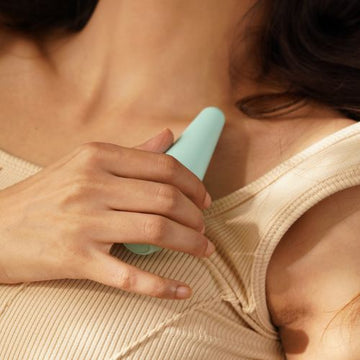
Use tools thoughtfully. A quality personal massager provides consistent stimulation that your hands can't always replicate, freeing your attention to notice subtler sensations elsewhere. This isn't a shortcut — it's a way to explore different combinations of stimulation without distraction.
What the Future of Orgasm Research Looks Like
Neuroscience is still in relatively early stages of mapping pleasure in the brain. Functional MRI studies have shown that orgasm activates over 30 brain regions simultaneously — more widespread activation than almost any other human experience. Researchers are now investigating questions like:
- Why do some people experience orgasm more easily than others? (Genetics appears to play a role, with twin studies suggesting heritability of orgasm frequency)
- Can mindfulness training change orgasm capacity? (Early research suggests yes)
- What role do neurotransmitters beyond dopamine play? (Oxytocin, endorphins, and even endocannabinoids are all involved)
- How does chronic stress physically alter pleasure pathways? (It does, and recovery is possible)
The most exciting insight from modern research may be the simplest: pleasure is learnable. The neural pathways involved in orgasm are not fixed at birth — they strengthen with use, expand with exploration, and respond to attention and intention. Your pleasure map at 30 can be meaningfully different from your pleasure map at 25, not because something is wrong but because the brain is always adapting.
Common Questions About Different Types Of Orgasms
Is it normal to only experience one type of orgasm?
Completely normal. Many people primarily experience orgasms through one type of stimulation throughout their lives, and there's nothing wrong with that. The nerve pathways in your body are unique to you. If clitoral orgasms are your primary experience, that's your nervous system working exactly as it should. Variety is optional, never required.
Can men experience multiple types of orgasms too?
Yes. While the conversation often focuses on people with vulvas, people with penises also have multiple nerve pathways. Penile orgasms (pudendal nerve), prostate orgasms (pelvic and hypogastric nerves), and nipple-enhanced orgasms all involve different neural circuits. Research on prostate stimulation shows it can produce qualitatively different orgasmic experiences from penile stimulation alone.
Why do orgasms feel different at different times?
Multiple factors influence how an orgasm feels: your arousal level, stress hormones, menstrual cycle phase (for those who menstruate), how much time was spent on arousal, emotional state, and even sleep quality. The same type of stimulation can produce noticeably different experiences on different days because your neurochemistry and hormonal environment are constantly changing.
Are some people physically incapable of orgasm?
Primary anorgasmia (never having experienced orgasm) affects roughly 5-10% of women and is less common in men. In most cases, it's addressable with the right support. Causes can include certain medications (particularly SSRIs), hormonal factors, pelvic floor dysfunction, or psychological factors. A sexual health specialist can help identify the specific barrier. The vagus nerve pathway means that even people with spinal cord injuries may have orgasm capacity.
Does age change what types of orgasms you can experience?
Age changes the context but not the fundamental capacity. Hormonal shifts (menopause, andropause) can alter sensitivity and arousal patterns. Some people find that orgasms become more diffuse and whole-body with age as they learn their bodies better. Others find they need more direct stimulation. These changes are normal adaptations, not decline. Many sexual health professionals note that people in their 40s and 50s often report more satisfying intimate lives than they had in their 20s.
Pleasure Meets Quality
MyMuse's thoughtfully designed personal wellness products are made for curious, body-positive exploration. Discover what feels right for you.
Browse Products- 100% Body-Safe Materials
- Discreet Packaging & Billing
- Designed for Indian Consumers
- Expert-Reviewed Content
Last updated: April 2026