







ASMR and Intimacy: How Sound Triggers Desire

This content is for informational purposes only and does not constitute medical advice. Consult a healthcare professional for personal guidance.
You're lying in bed, scrolling through your phone, when a video catches your attention. Someone's whispering softly, brushing their fingers across fabric, tapping rhythmically on a wooden surface. Your scalp tingles. Your shoulders relax. And unexpectedly, you feel a warmth spreading through your body that has nothing to do with the temperature of the room.
Welcome to the intersection of ASMR and arousal: a phenomenon that's quietly (pun intended) reshaping how people think about desire, connection, and what actually turns them on. The internet has made ASMR mainstream, with millions seeking out those signature tingles. But here's what's less talked about: for many people, ASMR doesn't just relax them. It awakens something else entirely.
The connection between autonomous sensory meridian response and intimate desire isn't random. Both involve heightened sensory awareness, deep relaxation, and the activation of pleasure centers in the brain. And understanding this link might just change how you approach intimacy, with yourself and with a partner.
Key Takeaways
- ASMR triggers can activate the same reward pathways in the brain associated with intimacy and pleasure
- Sound-based arousal is a valid and increasingly common way people experience desire
- Combining ASMR elements with intimate wellness practices can deepen sensory awareness
- Personalized ASMR preferences vary widely, what tingles for one person might do nothing for another
- Incorporating intentional sound and whisper into partner play creates new dimensions of connection
What Exactly Is ASMR, and Why Does It Feel So Good?
ASMR, autonomous sensory meridian response, describes that tingling sensation that typically starts at the scalp and moves down the spine in response to specific auditory or visual triggers. Whispering voices, tapping sounds, personal attention scenarios, repetitive movements. These are common catalysts.
Researchers have found that ASMR activates regions of the brain associated with reward, emotional arousal, and social bonding. Brain imaging studies show increased activity in areas like the nucleus accumbens (your brain's pleasure center) and the prefrontal cortex (involved in focus and awareness). Essentially, ASMR creates a state of relaxed attention where you're both calm and highly attuned to sensory input.
Sound familiar? That's precisely the headspace many people describe during intimate moments: present, focused, simultaneously relaxed and heightened.
The ASMR-Arousal Connection: More Common Than You Think
Here's where it gets interesting. While ASMR communities often emphasize the non-sexual nature of tingles, many people experience a different reality. A significant subset of ASMR enthusiasts report feeling aroused by the same triggers that give them tingles. And there's solid neurological reasoning for this overlap.
Both ASMR and arousal involve dopamine release, heightened sensory processing, and parasympathetic nervous system activation (the "rest and digest" state that's essential for pleasure). The gentle, focused attention characteristic of good ASMR content mirrors the kind of attentiveness that builds desire between partners, being seen, heard, responded to with care.
Think about it: a whispered voice close to your ear, the deliberate slowness of touch, undivided attention on your responses. These are ASMR staples. They're also hallmarks of attentive, connected intimacy.
Sound as Foreplay: Practical Applications
Understanding the ASMR-intimacy link opens up new possibilities for how you approach pleasure. Here's how people are experimenting:
Solo Exploration
Many people now incorporate ASMR audio into their personal wellness routines. Instead of (or alongside) visual content, they're finding that sound-focused experiences create a different quality of arousal: slower-building, more embodied, less performative. The focus shifts from watching something happen to feeling sensations in your own body.
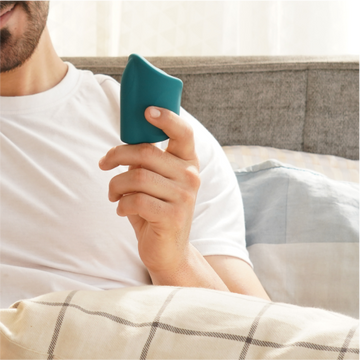
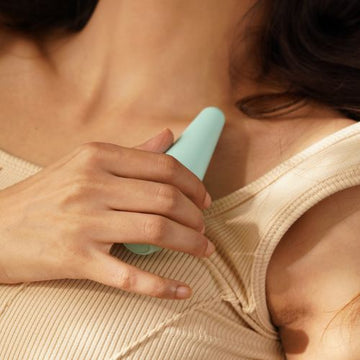
Pairing this auditory stimulation with body-safe personal massagers creates a multi-sensory experience. The quietness of the device matters here. You want to maintain that sound awareness, not drown it out.
Partner Play
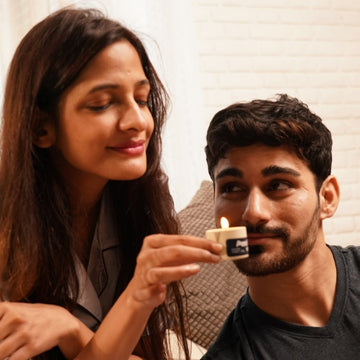
Bringing ASMR principles into partnered intimacy means slowing down and emphasizing sensory variety. Try incorporating:
- Whispered communication: Instead of silent touch, add verbal guidance: quiet descriptions of what you're doing, what you notice, what feels good
- Deliberate sound creation: The rustle of fabric, the sound of breath, intentional tapping or tracing
- Close-proximity audio: Speaking or breathing near your partner's ear (with consent. This can be intense)
- Focused attention scenarios: Role-playing attentive care, like a spa experience or guided relaxation, with intimate elements
The Cultural Context in India
In spaces where open conversations about desire remain complicated, ASMR offers an accessible entry point. You can explore your sensory responses privately, without the baggage that sometimes comes with more explicit content. There's something beautifully democratizing about discovering what actually works for your nervous system, rather than what you think should work.
The privacy factor matters here too. Quality headphones and solo exploration mean you're in complete control of your experience, important in shared living situations or when discretion is valued.
Not Everyone Experiences ASMR: And That's Okay
Estimates suggest that 20-30% of people don't experience ASMR tingles at all. Others find certain triggers actively irritating (misophonia is real, and mouth sounds are a common culprit). Your sensory wiring is unique.
If traditional ASMR doesn't work for you, that doesn't mean sound isn't part of your arousal landscape. You might respond more to music, to silence, to ambient environmental sounds, or to specific voices that have nothing to do with intentional ASMR creation. The principle remains: pay attention to what your nervous system responds to, rather than forcing a particular approach.
Quick Take
ASMR's connection to intimacy isn't a quirk. It's your nervous system responding to the same ingredients that make physical connection feel good: attention, gentleness, sensory variety, and safety. Whether you're exploring alone or with a partner, treating sound as an intimate element opens up new dimensions of pleasure.
Building Your Own ASMR-Informed Intimacy Practice
Curious about experimenting? Start here:
Identify Your Triggers
Spend time with different ASMR content to notice what creates responses in your body. Whispering? Tapping? Personal attention scenarios? Accent-specific voices? There's enormous variety: find what resonates with you personally.
Create the Right Environment
ASMR requires focus. Use good headphones, minimize distractions, and give yourself permission to be present with subtle sensations rather than seeking immediate intensity.
Combine Modalities Thoughtfully
If you're pairing sound with touch (either self-pleasure or partnered), choose products that complement rather than compete. Quieter personal massagers work better than loud buzzing. Body-safe materials matter when you're this tuned in. Your heightened awareness will notice everything, including uncomfortable sensations.
Communicate If Sharing
Bringing ASMR elements into partner intimacy requires conversation. What sounds feel good? What's too intense? Does your partner want to create the sounds, or would you prefer external audio? Clarity here prevents awkwardness later.
The Bigger Picture: Desire Is Sensory
The ASMR-intimacy connection reminds us that arousal isn't one-dimensional. We've been conditioned to think about desire in fairly narrow terms: visual stimulation, genital focus, predictable progression. But your nervous system is far more nuanced than that.
Sound, texture, temperature, scent, the quality of attention you're receiving, all of these shape your capacity for pleasure. ASMR enthusiasts have simply figured out that activating the tingles pathway can be a destination in itself, or a beautiful on-ramp to other experiences.
This is especially valuable for people who struggle with more conventional approaches to arousal. If performance pressure kills your desire, the low-stakes exploration of ASMR might bypass that anxiety entirely. If you need serious relaxation to access arousal, ASMR builds that foundation. If you're in a sensory-seeking phase of life, this adds new dimensions to explore.
Ready to Explore?
Discover body-safe personal massagers designed for gentle, sensory-focused exploration. Quiet operation, thoughtful design, and materials you can trust.
Explore the RangeFrequently Asked Questions
Is it normal to feel aroused by ASMR videos?
Absolutely. While ASMR communities often emphasize the non-sexual aspect of tingles, there's significant overlap in the brain regions activated by ASMR and arousal. Both involve dopamine release, heightened sensory awareness, and relaxation. Many people experience ASMR on a spectrum from purely relaxing to genuinely arousing, and there's no "wrong" response. Your nervous system is simply responding to stimuli that feel good to it.
Can ASMR help if I struggle with arousal or desire?
It might. ASMR's strength is creating relaxed, focused attention, and anxiety is one of desire's biggest obstacles. If performance pressure, racing thoughts, or difficulty being present interfere with your intimate experiences, ASMR's gentle approach can help train your nervous system to relax into pleasure. Think of it as building your capacity for sensory awareness without pressure or expectation.
How do I incorporate ASMR into partnered intimacy without it feeling weird?
Start with conversation outside the bedroom. Share what you've discovered about your responses to sound, whisper, or focused attention. You might begin by simply adding more verbal communication during intimacy, quiet descriptions, whispered guidance, rather than jumping straight to intentional ASMR roleplay. Many couples find that slowing down and emphasizing sensory variety (including sound) deepens connection naturally. The key is framing it as exploration you're inviting your partner into, not a requirement or performance.
What if I don't experience ASMR tingles at all?
You're not broken: research suggests 20-30% of people don't experience classic ASMR responses. But that doesn't mean sound isn't relevant to your intimate life. You might respond to different auditory elements: music, natural sounds, specific voices, or even silence. The broader principle is about paying attention to your sensory landscape and what genuinely works for your nervous system, rather than forcing a trendy approach that doesn't fit you.
Are there products specifically designed for sound-focused intimate experiences?
While products aren't marketed specifically for ASMR, quieter personal massagers work beautifully with sound-focused intimacy because they don't compete with auditory awareness. Look for products described as "whisper-quiet" or those using pressure-wave technology rather than traditional vibration. Body-safe materials also matter more when you're this tuned in to sensation.
- 100% Body-Safe Materials
- Discreet Packaging & Billing
- Trusted by 3.75L+ Customers
- 100-Day Warranty
- 100% Body-Safe Materials (Platinum-Grade Silicone)
- Discreet Packaging & Billing
- Trusted by 3.75L+ Customers Across 1,900+ Cities
- 100-Day Warranty on All Products
Last updated: April 2026