







Are Sex Toys Legal in India? What the Law Says
This article is general information, not legal advice. Laws and court orders change. For a live dispute with Customs or the police, speak to a qualified Indian lawyer.
Short answer: No Indian law names vibrators or massagers, and we found no reported case that punished a buyer for owning or using one at home. The real risk is importing a parcel yourself. Customs can seize it under a 1964 notification on obscene articles, though the Delhi High Court held in October 2025 that body massagers fall outside that notification. Buying from an Indian seller skips the customs desk entirely.

Last reviewed 03 Nov 2026 by Swarup Narayan, Team MyMuse. Prices checked the same day.
Is it illegal to buy, own or use a vibrator or massager in India?
Not under any law we could find. The provision people worry about is section 294 of the Bharatiya Nyaya Sanhita, 2023, which replaced section 292 of the IPC on 1 Jul 2024. It is an obscenity offence, not a product ban. Section 294(1) deems material obscene if it "is lascivious or appeals to the prurient interest". Section 294(2) punishes whoever "sells, lets to hire, distributes, publicly exhibits or in any manner puts into circulation" an obscene "book, pamphlet, paper, writing, drawing, painting, representation, figure or any other object", with up to two years and a fine of up to ₹5,000 on a first conviction. The full Act is on India Code.
Section 295 of the BNS (the old IPC 293) is a related offence: selling or circulating such an object to a child. That is about supply to minors, not about an adult keeping a massager at home.
Notice what is missing. The sections are about publishing, selling and displaying obscene things. They do not name massagers, vibrators or any intimate product, and keeping something in your own bedroom is not putting it "into circulation". Since Justice K.S. Puttaswamy v Union of India, (2017) 10 SCC 1, privacy has been a fundamental right, which is the basis of the line on MyMuse's FAQ page about privacy within your own space.
Is it illegal to sell intimate products in India, and why are listings so coy?
Selling is not banned either. What the law polices is how a product is described and shown: section 294(2) also covers advertising obscene objects, and section 67 of the Information Technology Act, 2000 covers publishing or transmitting obscene material in electronic form. That pair is why product pages across this category read like skincare listings. In the October 2025 judgment below, the Delhi High Court also recorded that products similar to those seized by Customs were being sold domestically and there was no prohibition as to its sale.
Can customs seize a vibrator I order from abroad?
Yes, and this is where the real risk sits. Section 11 of the Customs Act, 1962 lets the Central Government prohibit imports by notification for purposes that include "the maintenance of public order and standards of decency or morality". Notification No. 1/1964-Customs dated 18 Jan 1964 uses that power to prohibit the import of "any obscene book, pamphlet, paper, drawing, painting, representation, figure or article". That line is what officers cite when they hold a consignment.
The courts have pushed back each time the question reached them. In Kavita Phumbhra v Commissioner of Customs (Port), Calcutta, 2011 SCC OnLine Cal 2378, a Division Bench set aside the confiscation of intimate products meant for sale to adults. Its words: "an article or instruction suggesting various modes for stimulating the enjoyment of sex, if not expressed in any lurid or filthy language, cannot be branded as obscene" (judgment as quoted in Juscorpus, Jan 2023).
Then came the body-massager cases. In M/s Arav Trading Company v Union of India, W.P.(C) 14929/2025, Customs seized goods the importer later said should have been declared as a "Silicone Male Massager" under tariff heading 90191010, and treated them as obscene and prohibited. On 30 Oct 2025 a bench of Prathiba M. Singh and Shail Jain JJ, at paragraph 20, recounted the Bombay High Court's ejusdem generis reading of the 1964 Notification: "only products in the nature of book, pamphlet, paper, drawing, painting, representation, figure or article, etc, would be prohibited. The products such as 'body massagers' would not fall within the scope of the 1964 Notification." At paragraph 21 it said it was in agreement with that decision and added that whether a product is obscene "cannot, obviously, be left at the discretion of the Commissioner of Customs and other individual officials, in the absence of uniform guidelines for a consistent practice in this regard" and ordered provisional release (judgment PDF, Delhi High Court).
Every reported Indian decision on intimate products and customs
| Date | Court and case | What was decided | Source |
|---|---|---|---|
| 29 Jul 2011 | Calcutta High Court, Kavita Phumbhra v Commissioner of Customs (Port) | Confiscation of imported intimate products set aside as not obscene | Juscorpus paper quoting the judgment |
| 25 Oct 2024 | Bombay High Court, B.K. Polimex India v Union of India | Confiscation of seven drawings quashed, relying on Phumbhra; the officer had applied personal moral standards | LiveLaw judgment PDF / Indian Kanoon |
| 30 Oct 2025 | Delhi High Court, M/s Arav Trading Company v Union of India | "Body massagers" held outside the 1964 notification; provisional release ordered | Judgment PDF |
| 30 Oct 2025 | Delhi High Court, Techsync v Superintendent of Customs | Provisional release ordered; CBIC directed to conduct an inter-ministerial consultation on a uniform import policy; compliance listed for 9 Dec 2025; review petitions dismissed on 21 Nov 2025 | Judgment PDF, Delhi High Court (30 Oct 2025) |
| 14 Sep 2026, merits pending | Calcutta High Court, M/s Pracha Aalloy v Union of India, WPO/370/2026 | Writ held maintainable; the court said subjective morality that hits the right to trade can be examined under Article 226. Merits were listed for 9 Oct 2026; no final merits ruling published when we checked on 03 Nov 2026 | Bar and Bench |
One dated caveat. We could not find a published CBIC uniform import policy for body massagers when this page was written on 03 Nov 2026. Until one exists, a parcel you import yourself can still be held at the port and argued over.
Does buying from an Indian seller change anything?
It removes the one step that carries real risk. Every case in the table is about goods arriving at an Indian port or airport. Order from an Indian seller and your parcel is a domestic courier shipment, with no customs desk between the warehouse and your door. The company on a MyMuse order is MyMuse India Private Limited, CIN U51909MH2020PTC350003, incorporated on 11 Nov 2020 with its registered office in Thane.
MyMuse's FAQ states that "all packages are shipped in plain cardboard boxes with no MyMuse branding, or product details on the outside", and that transactions show as "MyMuse India Private Limited" on bank statements (MyMuse FAQ). One four-star Link+ review: "got it delivered in a unmarked plain dabba".
If you want a concrete Indian pick rather than a foreign site:
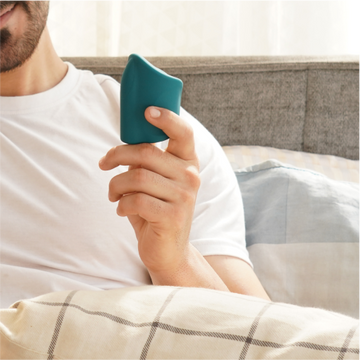
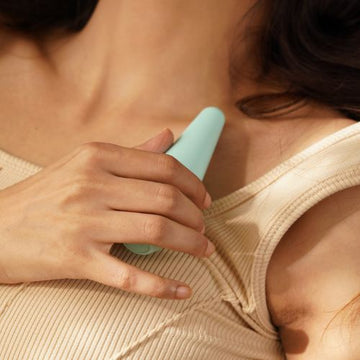
- Pulse (₹1,699) is a palm-sized beginner massager in body-safe silicone.
- Edge (₹3,599) is the men's power stroker, shipping from inside India.
- Glide water-based lube (₹699) is the everyday bottle; stock moves, so check the product page before you buy.
Can I carry one on a flight or on the metro?
Nothing in the statutes above makes a massager contraband, so the questions at airport security are about batteries and liquids, not legality. Check your airline's rules on lithium-battery devices and spare batteries before you fly; our travel guide covers cabin versus check-in baggage and lubricant. The same logic applies on the metro: section 294 is about obscene publication, sale and display, not about what is zipped inside your bag. One reviewer, back from a holiday: "Looks like a skincare tool, Didn't freak out airport security lol".
Has anyone in India actually been prosecuted?
No buyer, in any reported case this research could find. Every reported fight has been importer versus Customs over a consignment. In the decided cases in the table, courts ordered final or interim release; Pracha Aalloy remains pending on the merits, so that row is not a final release finding. The one well-known attempt to prosecute a seller went nowhere that we could trace: in February 2015 a Delhi lawyer filed a criminal complaint against Snapdeal and an intimate-products website under IPC sections 292, 292A, 293, 294 and 377, telling Quartz he "only wanted to test the law". A Metropolitan Magistrate at Tis Hazari directed the police to file a report on 5 Feb 2015, and no conviction or further order turned up in our research (Legally India, 25 Feb 2015).
What is MyMuse's own position?
The FAQ answers "Is ordering products from MyMuse legal?" with "Simply put, yes", and says the range was chosen to stay on the right side of the law, with products "procured legally and have been registered where necessary". MyMuse is an Indian sexual-wellness brand selling personal massagers, lubricants and intimacy products on mymuse.in and quick-commerce apps. For packaging and payment privacy, see how to buy discreetly in India and is it safe to buy intimate products online in India.
Key takeaways
- No Indian statute names vibrators or massagers; BNS sections 294 and 295 are obscenity offences about publishing, selling, displaying and supplying to children.
- No reported case has punished a buyer for owning or using an intimate product at home.
- Self-importing is the risk: Customs can hold parcels under Notification 1/1964, and we found no published CBIC uniform policy as of 03 Nov 2026.
- The Delhi High Court held on 30 Oct 2025 that "body massagers" fall outside the 1964 notification.
- A parcel from an Indian seller moves by domestic courier and never passes a customs desk.
Frequently asked questions
Is it illegal to order a vibrator online in India?
No law in India prohibits buying a vibrator or personal massager online. Section 294 of the Bharatiya Nyaya Sanhita is about publishing, selling and displaying obscene material and does not name intimate products. An order from an Indian seller arrives by domestic courier, with no customs step.
Will customs stop a massager I order from a foreign website?
It can be held. Customs has seized imported massagers under Notification No. 1/1964, although the Delhi High Court held on 30 Oct 2025 that "body massagers" fall outside that notification and ordered release. We could not find a published CBIC uniform policy when we checked on 03 Nov 2026.
Why do people think intimate products are illegal in India?
Because the obscenity sections (IPC 292/293, now BNS 294/295) are broadly worded, news of customs seizures travels further than the judgments that overturn them, and listings stay coy to keep clear of IT Act section 67. No reported Indian case has found a buyer guilty of anything.
Can I carry a personal massager in cabin or check-in baggage in India?
Carrying a personal massager is not a legal problem; no statute treats it as contraband. The practical rules are the airline's lithium-battery rules for rechargeable devices and spare batteries, and the liquid limits for lubricant. MyMuse's travel guide walks through both.
Is MyMuse a legal website in India?
MyMuse is run by MyMuse India Private Limited, CIN U51909MH2020PTC350003, incorporated on 11 Nov 2020 and registered in Thane. Its FAQ answers the legality question with "Simply put, yes", it ships in plain boxes with no branding outside, and it bills as "MyMuse India Private Limited".
Bought in India, delivered in a plain box. Every MyMuse order ships inside India, in a box that says nothing about what is in it. Explore the range.
This guide is general information, not legal advice. Products for ages 21+. Prices checked on mymuse.in on 3 November 2026 and may change. For adults only.